

- Eating Out in Jacobsbaai & beyond
 Jacobsbaai may be quiet, but it’s full of character – meet up in these three local gems for the best food, drinks and company:
- The House of Bean & Leaf: Right at the entrance to the village with an extensive menu of food & drinks and the kind of events that bring the community to life. 082 735 2279
- Daai Plekkie in die Weskus: Perched on the edge of Main Bay, this is the spot for great views, catching sport on the big screens, or enjoying a vibey quiz evening. 067 595 1807
- Karmenaadtjie Padstal & Bistro: About 4 km before Jacobsbaai, expect warm hospitality, a true West Coast menu, and great Padstal shopping too. 083 463 4042
And then there’s:
- Almost eating out – our Braaikamer On-The-Bay can be booked for the most amazing personalised sunset braais. Contact us to get more info. 082 810 9577
- If you’re desperate – Checkers Sixty:60 delivers in Jacobsbaai.
- For emergency and snacks: Jacobsbaai Superette, Entrance, Jacobsbaai
- To Explore: The Deli, Entrance, Jacobsbaai
Other restaurants in neighbouring towns which we highly recommend include:
The Bay Club – Blue Bay Lodge – Saldanha
Thoban – Langebaan
Die Seekat – Paternoster
Charlies – Port Owen
Soverby – Dwarskersbos
Thali–Thali – Langebaanweg
This is a very small selection from a very long list of excellent eating places. We provide guests with recommendations dependent on personal tastes and budgets. Follow our Facebook & Instagram to get inspiration as we share our experiences.
2. Jacobsbaai places to explore / things to do
- Pixie & Fairy Village – 073 302 5835
- Jacobsbaai Labyrinth – 073 302 5835
- Various Estate Agents (You may want to own a piece of this magic)
- The Tower – WWII lookout tower between Moeries & Kwaaibaai
- The Boma & Biosphere – along gravel Road to Saldanha (Wildflower viewing)
- Margerit Shipwreck – barge wreck in June 2009 in Hospital Bay
- Splash Rock – Kwaaibaai
- Gonnamanskraal – North of Hospital Bay – Private Estate – Walkin only.
- Old Crayfish Factory – overlooking Main Bay (Home of Rotsvas Gemeente Church)
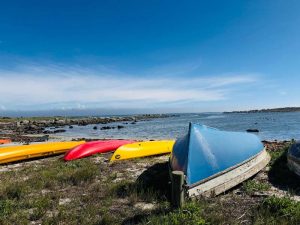
- Bird watching, shore fishing, walking, cycling, hiking, swimming, kayaking, surfing, sunsets, photography, history & nature walking tours, wildflowers (July-Sept).
3. Focus on … The Seven Stunning Bays
 Our village is unique for its seven individual bays, each with its own character. From the calm waters of Mauritzbaai to the rugged, crashing waves of Kwaabaai, there is a shoreline for every mood. Whether you’re a solo traveller seeking a quiet spot to think or a couple looking for a romantic sunset stroll, our coastline is your playground.
Each bay offers a unique “Weskus” experience, and all are within a scenic stroll from our front door:
- Toothrock & Kwaaibaai (Angry Bay): Photographer’s dreams where the Atlantic shows its raw power. Ideal for those who find peace in the sound of crashing waves.
- Mauritzbaai: The serene contrast between Toothrock & Kwaaibaai, under the protective watch of the historic lookout tower. Its azure rock pools and calm inlets are perfect for a quiet morning coffee by the water, gentle kayaking, and bird watching.
- Smalbaai & Bamboesbaai: From lush kelp forests to sheltered sandy pockets, these bays provide endless opportunities for coastal hiking, and beachcombing.
- Jacobsbaai (Main Bay): Busy with general public access for bathing & fishing, home to the famous Daai Plekkie restaurant.
- Hospital Bay: Steeped in history, this bay offers a tranquil atmosphere and a glimpse into the maritime heritage of the West Coast.
4. Focus on … A Floral Wonderland (Seasonal Wildflowers)
 During the late winter & early spring – late July to mid September – the landscape transforms. Jacobsbaai becomes a vibrant tapestry of seasonal West Coast wildflowers.
This “flower season” draws photographers and nature lovers from across the globe to witness one of South Africa’s most beautiful natural spectacles.
Often called the “Namaqualand of the Coast,” Jacobsbaai undergoes a breathtaking transformation as greenbelts turn colourful.
With local experts, you’ll be guided to find the best patches of seasonal West Coast wildflowers that blanket the village in vibrant whites, yellows, oranges, pinks and purples.
Learn to identify the multitude of varieties, and marvel the wonders of the exquisitely tiny endangered and rare wildflowers that only call Jacobsbaai home.
5. Focus on … Abundant Wildlife & Birdwatching
 Jacobsbaai – and especially Moeriesbaai – is a haven for birdlife, including the migratory Terns and various Cormorants. For birdwatchers, the area is home to many ground birds, seabirds and birds of prey. The migratory flocks are majestic when they pass through their temporary resting spot in Moeriesbaai.
We are surrounded by green belts, so keep an eye out for our resident fauna such as Steenbok, Duiker, Mongoose, and Tortoises which roam freely. You may even spot an occasional caracal roaming the fynbos and veld outside of the village.
From June to November, keep your binoculars ready—Southern Right Whales frequently pass by our bays. And don’t forget the possible seals and sea otters.
Although not Flora or fauna – Moeriesbaai provides a great Dark Sky Experience With minimal light pollution. Our skyscapes are legendary. After a stunning sunset, the West Coast sky opens up into a canopy of stars—perfect for those looking to unplug and reconnect with the universe. Grab a good stargazing App and start exploring the skies…
6. Focus on … The Village itself
 Approach Jacobsbaai over the ‘Bult by our water tower and be enthralled by the picturesque village hugging the coastline below. Come down the hill into town and you’re captivated – a feeling to which most residents will attest.
The size and layout of the village calls you to explore and wander the roads. Armed with a map of the area, and knowing some of the history and background turns a stroll into a few hours of discovery.
Jacobsbaai is renowned for its traditional West Coast architecture—white-washed walls, thatched roofs, and stone accents nestled against the deep blue of the Atlantic.
Architectural guidelines require white or stone walls, smaller windows for traditional climate control, and 45° pitched roofs of thatch or grey metal. The multi-roof pitch of larger homes is specifically designed to resemble clusters of smaller units, and low property walls and open verges result in visual harmony throughout the village.
Jacobsbaai origins date back to hunter-gather days of the San people. For archaeologists, this is rich territory – all the way from Moeriesbaai to the West Coast Fossil Park. Back in the 17th century, trading ships heading to Cape Town used to drop their ill sailors in Hospital Bay for quarantine purposes.
Early establishment of the settlement here was sometime in the early 1800’s by the West Coast trading company Stefan Bros. The name “Jacobsbaai” probably evolved from Jacques Titius, a French colonial trader, who also gave his name to the famous Tietiesbaai near Paternoster.
The town was formally established in the late 1980s, with development starting in 1992 between Kiron Holdings and Forellendam. Mauritzbay (Moeriesbaai) was launched in 2003, and Toothrock in 2009. Stand prices were originally advertised from R70 000, and today these sea front properties can cost over R4 million – if you can find one.
Located an easy 150km from Cape Town International Airport, the town consists of about 600 plots sized between 300–1200m², with around 500 homes built and more underway. Real estate is scarce, but future developments will offer new plots. Commercial properties are limited to a superette, doctor’s office, and a few restaurants; there are no fuel stations nor ATMs – the nearest commercial facilities are 15 km away in Saldanha or Vredenburg.
The ‘old town’ comprises most erfs, and streets here are named after town founders. The southern ‘tail’ comprising Moeriesbaai and Toothrock, is less densely developed with only two roads parallel to the coastline and are quieter as there is no through-route. Here, streets are named after regional flora and fauna.
The town is laid out with numerous cul-de-sacs called “Keeroms”, creating pedestrian-friendly spaces. The town has roughly 4km of sea frontage across the seven small bays, with pedestrian/ floras/fauna friendly greenbelts for a village feel. Several roads in the old town remain unpaved, adding rustic charm.
7. West Coast Weather (more reasons WHY we love Jacobsbaai)
 The climate here is mostly Mediterranean, with winter rainfall mainly from April to November.
- Temperate climate
- Winter temperatures average 7–19°C (ranging 2–26°C), while summers average 15–30°C (ranging 10–39°C).
- Daily highs are typically around 29°C in summer and 18°C in winter.
- Sea temperatures, influenced by the cold Benguela current, range from 14–17°C, with shallow bays a bit warmer.
- Humidity is dry to bearable with only a few days a year where it’s quite high.
- Long sunny days – Sunrise varies from 07:50 in winter to 05:50 in summer; sunset ranges from 17:50 in winter to 20:00 in summer, usually with a golden 30 mins on either side. Most days are sunny, including at least 15 sunny days per month even in winter, and morning mists are common.
- Windy conditions are frequent, however usually less than 20 km/h, but southerly or south-westerlies occasionally reach impressive strengths of over 70 km/h.
- Tidal ranges – Low tides range 0–0.8 m, high tides 1.2–2.2 m above sea level make bay-watching a changing vista of awe.
- Rainfall – Average annual rainfall is about 260 mm, mostly between April and August (40–70 mm/month). Even July has some awesome sunny days or even stolen hours between showers when the light is magic and the bay calls for a walk. Summer rain is rare.
8. Beyond The Bay: Jacobsbaai – Gateway to the West Coast
 While Jacobsbaai is a peaceful sanctuary, we are perfectly positioned for you to explore neighbouring West Coast gems. With over 20 towns within an hour’s drive, you need a few days to do justice to the area. Our closest neighbours are:
- Paternoster: Just a short drive away for gourmet dining and art galleries.
- Vredenburg: For essential shopping and business needs.
- Saldanha: For history tours and great views of the harbour, lagoon, and Atlantic.
- Langebaan: Busy, vibey, international wind town, golfing estates & yachting.
- Velddrif/Port Owen/Laaiplek: Berg River harbour, river tours, Bokkom Laan.
- St Helena Bay: Views, history, restaurants, harbours, quaint shops.
- West Coast National Park: Great day trip to see the Postberg flowers or the Langebaan lagoon.
Ask us about our specially curated “One Day Self Drive Routes” and shorter drives. Each of these are designed with our favourite stops and ideas to suit your interests. We provide both route plans and places of interest. Your task is to check off as many as possible and to plan your return to tackle the next exploration…
Just a snapshot of places/things to do:
- Padstals & markets
- Darling Olives
- Kokerboom artisan cheese
- Darling Sweet & Toffee
- Het Vlok preserves
- Route 44 & Mooresburg museums
- West Coast fossil park
- Thali Thali game park
- !kwatthu San village
- Khoisan Natural Salt
- Saldanha & Berg River harbours,
- Berg river cruise,
- Lagoon tours
- Kitesurfing
- Park Runs and marathons
- Sailing
- Surfing
- Bird watching
- Walking tours (history, flowers, birds, photography)
- Fower viewing,
- Wine farms (lots),
- Lots (& lots) of great restaurants
- West Coast National Park
- West Coast Fossil Park